
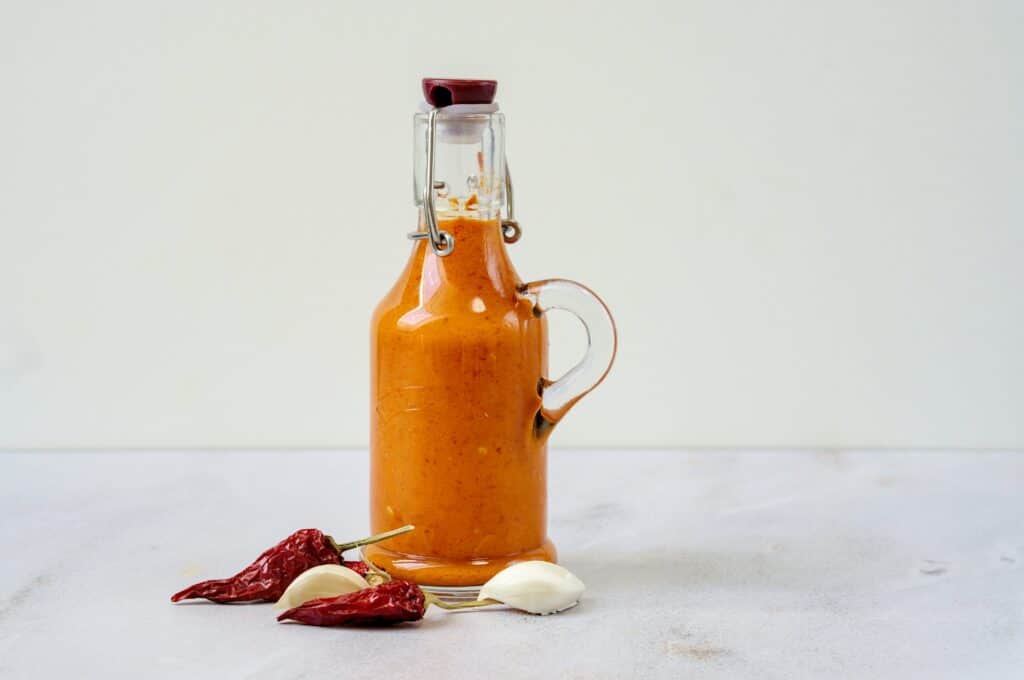

Homemade Fermented Hot Sauce
Disclosure: This post contains affiliate links, meaning, at no additional cost to you, we will earn a small commission if you click through and make a purchase. Learn more
- Home
- Recipes
- Fermented Food
- Homemade Fermented Hot Sauce
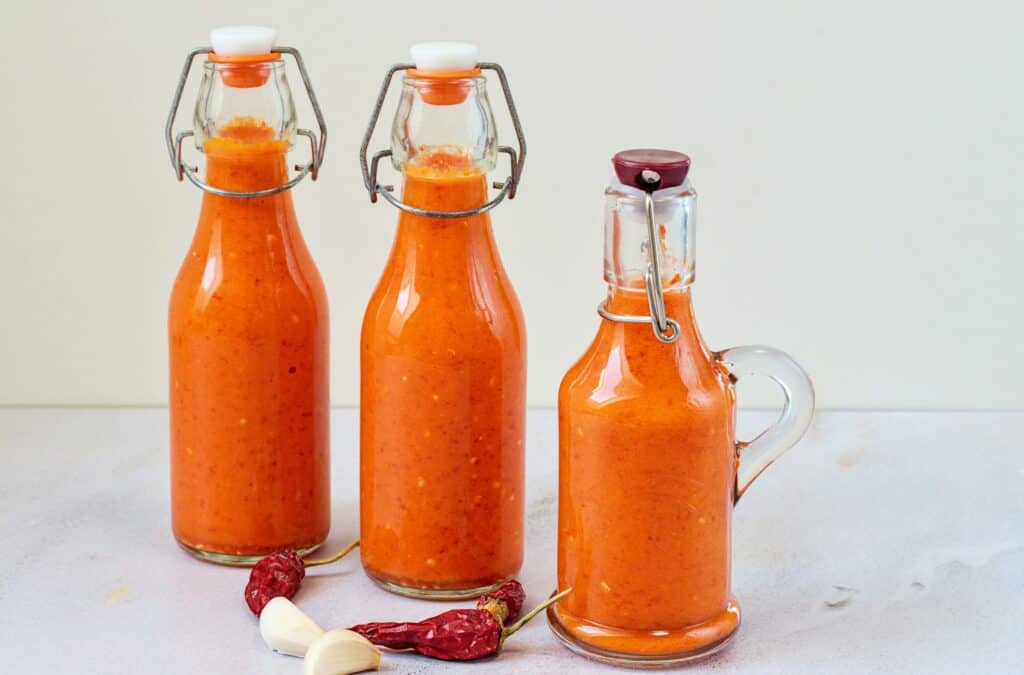
Homemade fermented hot sauce is easy to make, gives any dish an extra spicy-tangy kick, and comes with the added bonus of healthy probiotics from the lacto-fermentation process.
Making homemade fermented hot sauce is easy. The spicy and tangy taste will give that extra kick you want to any dish of your choice. What is more, this delicious lacto fermented hot sauce gives you the added benefits of healthy probiotics too.
We had a very good chili harvest, and I wanted to preserve them in as many ways as possible. First, I fermented them using the lacto fermentation method — it’s so easy. Since eating fermented chilies on their own isn’t really my thing, turning them into homemade fermented hot sauce is what we like most. My husband loves it.
Table of Contents
Why Ferment the Chilies First?
Fermentation is a metabolic process that produces chemical changes in organic substrates through the action of enzymes. An anaerobic (oxygen-free) environment lets good bacteria survive while bad bacteria perishes. That good bacteria is naturally occurring lactic acid, which consumes the carbohydrates in the chilies and converts them into acid.
After fermenting, the carbohydrates have been predigested, leaving the chilies with more vitamins and even more flavor than fresh chilies.
Tools you may need to make hot sauce
Disclosure: This post contains affiliate links, meaning, at no additional cost to you, we will earn a small commission if you click through and make a purchase. Learn more
How to Make Homemade Fermented Hot Sauce?
Ingredients List
- 400g hot peppers
- Salt (Himalayan or sea salt)
- Filtered water, about 1 liter
- 4–6 tbsp reserved ferment brine
- 2 tbsp apple cider vinegar
- 2 tsp whole sugar, 4 tbsp sunflower oil
- Garlic (optional)
Cooking Instructions
Prep the Chilies:
Remove the stems and slice the chilies in half. Remove the seeds and ribs if you want a milder sauce — the heat is concentrated in the ribs. Wear gloves or rub oil on your palms first, since hot peppers can burn bare skin for days.
Make the Brine:
Weigh the chilies and water, then calculate about 3% of that total weight in salt. Heat a little water, dissolve the salt into it, and let it cool to lukewarm.
Pack and Ferment:
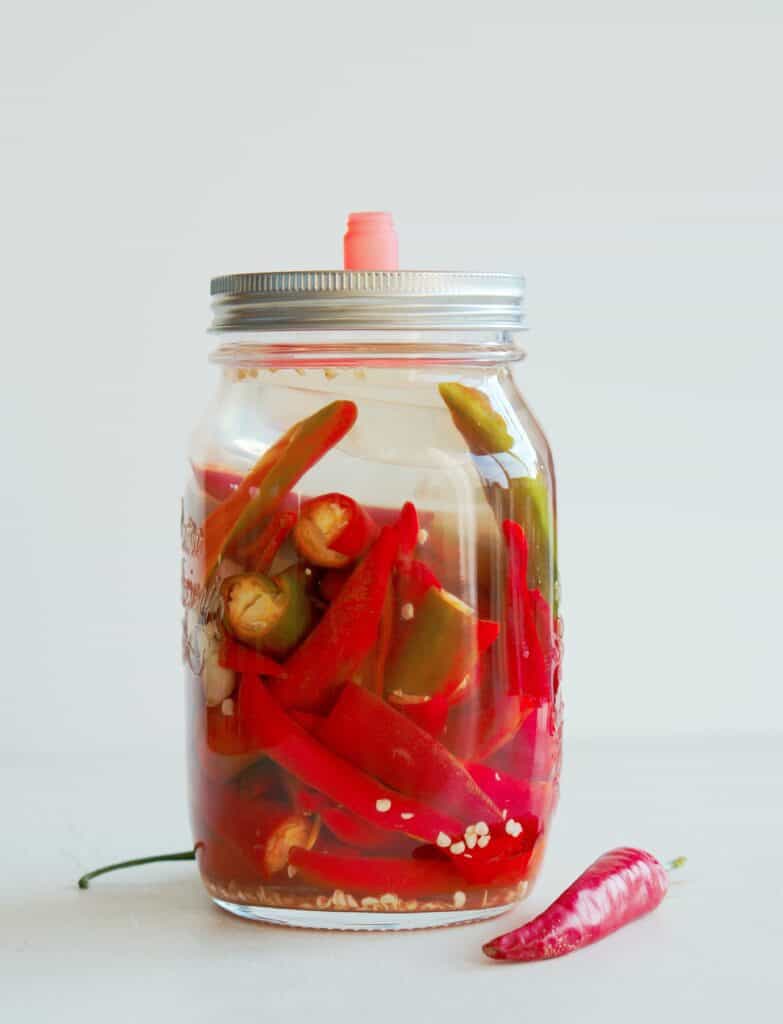
Pack the chopped chilies tightly into a jar, leaving space for a fermenting weight. Pour in the brine to cover, place a fermenting weight on top, and close with fermenting lids (or close the lid loosely and set the jar on a tray). Ferment for about 7 days — the brine will turn cloudy, and a thin white film (just yeast) may form on top, which is normal.
Blend the Sauce:
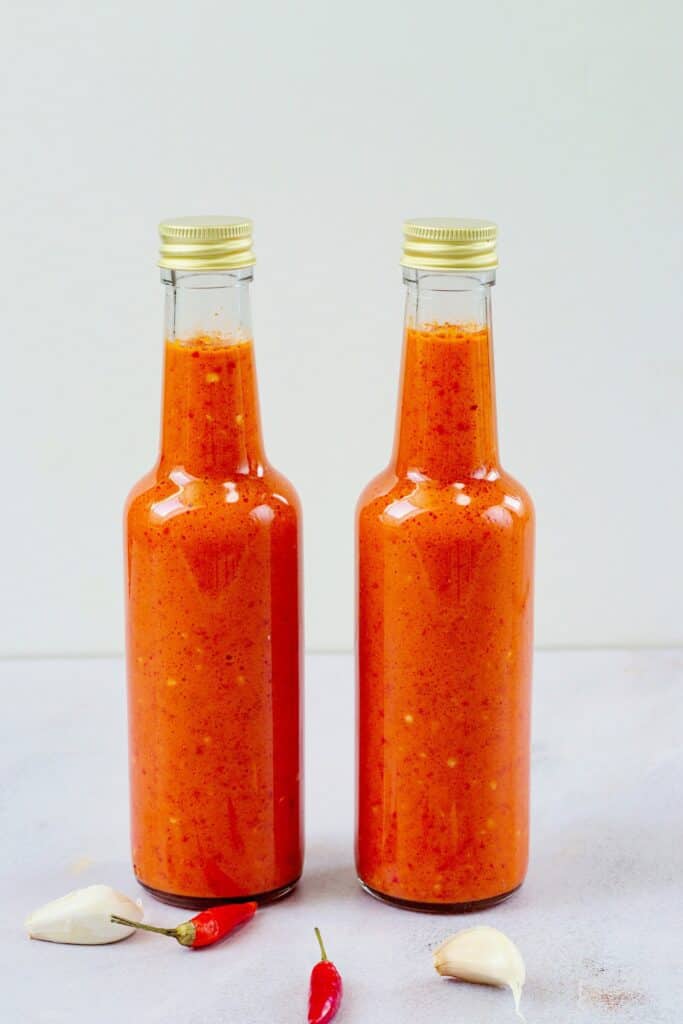
Drain the fermented chilies, reserving some of the brine. Blend the chilies with the reserved brine, vinegar, sugar, oil, and garlic (if using) until smooth. Taste and adjust the salt if needed.
Store:
Store the finished sauce in sterilized, airtight jars in the fridge.
Serving Suggestions
This sauce is hot, so a little goes a long way. Try it:
On pasta or lasagna: a small drizzle adds a serious kick (not for the kids!).
With raclette cheese: it helps with digesting the cheese too.
With Potato Dauphinois: the heat balances out this rich, bland dish nicely.
Tips to Make Fermented Hot Sauce
Keep peppers submerged: fermentation weights make this much easier, and keep the chilies fully under the brine.
Use the right brine: chilies are prone to mold, so use a 3% brine with non-iodized, non-fluoridated salt — Himalayan salt works well.
Use filtered water: chlorine can interfere with fermentation, so filtered or non-chlorinated water is best.
Protect your hands: with really hot peppers, wear gloves or rub oil on your palms first, and avoid touching your eyes.
Can You Cook With Fermented Hot Sauce?
Cooking with fermented hot sauce would defeat the purpose of fermenting it in the first place, since you’d lose the beneficial bacteria through the cooking process. It’s best served cold, stirred into a dish right before eating.
About the Peppers
Any medium-to-hot pepper works for this recipe. This batch used Diablo Grande chilies, which rate between 60,000 and 100,000 Scoville heat units — but there are many pepper varieties to choose from, each with its own heat level, so pick one that suits your spice tolerance.
Why Fermented Sauce Is Worth It
Beyond the flavor, this sauce carries the same probiotic benefits as other lacto-fermented foods — the good bacteria produced during fermentation is considered beneficial for gut health. That’s part of why it’s worth fermenting the chilies first rather than just blending fresh ones with vinegar.
Watch the Video
Recipe Card
Homemade Fermented Hot Sauce
5 Stars 4 Stars 3 Stars 2 Stars 1 Star
No reviews
- Total Time: 10080
- Yield: 50 servings 1x
- Diet: Vegan
Description
A spicy, tangy homemade hot sauce made from lacto-fermented chilies — easy to make and packed with beneficial probiotics.
Ingredients
- FOR THE FERMENTED PEPPERS
- 400g hot peppers (medium to hot)
- Salt (Himalayan or sea salt)
- About 1 liter filtered water
- FOR THE HOT SAUCE
- 400g fermented hot peppers (about 4 cups roughly chopped)
- 4–6 tbsp reserved ferment brine
- 2 tbsp organic apple cider vinegar
- 2 tsp organic whole sugar (Mascavado or sucanat)
- 4 tbsp sunflower oil
- 2–3 garlic cloves (optional)
- Salt to taste (roughly 2–3 tsp)
Instructions
-
Prep the Chilies:
Remove the stems and slice the chilies in half. Remove the seeds and ribs if you want a milder sauce — the heat is concentrated in the ribs. Wear gloves or rub oil on your palms first, since hot peppers can burn bare skin for days.
-
Make the Brine:
Weigh the chilies and water, then calculate about 3% of that total weight in salt. Heat a little water, dissolve the salt into it, and let it cool to lukewarm.
-
Pack and Ferment:
Pack the chopped chilies tightly into a jar, leaving space for a fermenting weight. Pour in the brine to cover, place a fermenting weight on top, and close with fermenting lids (or close the lid loosely and set the jar on a tray). Ferment for about 7 days — the brine will turn cloudy, and a thin white film (just yeast) may form on top, which is normal.
-
Blend the Sauce:
Drain the fermented chilies, reserving some of the brine. Blend the chilies with the reserved brine, vinegar, sugar, oil, and garlic (if using) until smooth. Taste and adjust the salt if needed.
-
Store:
Store the finished sauce in sterilized, airtight jars in the fridge.
Notes
Cooking with this sauce isn’t recommended, since heat destroys the beneficial bacteria — serve it cold. Store in the refrigerator; it typically keeps for several months to a year if no mold develops.
- Prep Time: 10080
- Category: Fermented Food
Nutrition
- Serving Size: 50
- Calories: 3
- Fat: 20
Frequently Asked Questions
Stored in the refrigerator, it typically lasts up to a year if stored well — check for any mold and discard if you see it. It keeps easily for 6 months without any issue in this household.
Depending on the season and the temperature in your home, fermentation usually takes anywhere from 5 days to a week.
Yes — cloudy brine after 3 to 4 days is completely normal, along with a thin white film of yeast on top, which you can skim off before blending.
Your feedback is valuable
If you try this recipe and love it, I would love if you come back and gave it 5 stars! Thank you so much for visiting Vital Fair Living – we’re so happy you’re here! I would love it if you can share this recipe using the social media buttons you see next to the post.