Healthy One Pot Kitchari Recipe
Disclosure: This post contains affiliate links, meaning, at no additional cost to you, we will earn a small commission if you click through and make a purchase. Learn more
- Home
- Recipes
- Main Dishes
- Healthy One Pot Kitchari Recipe
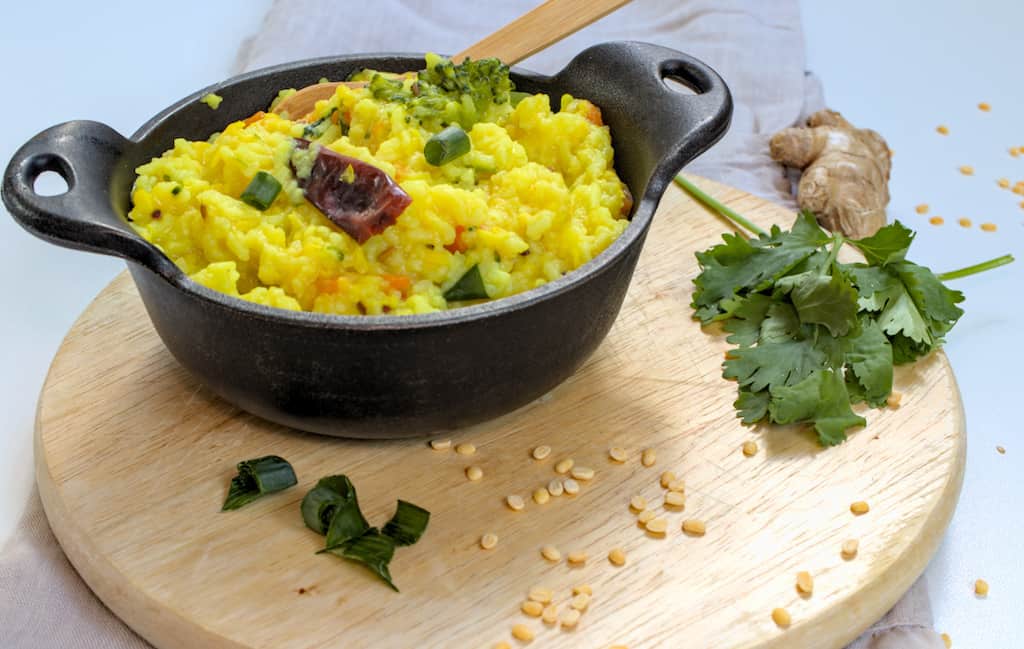
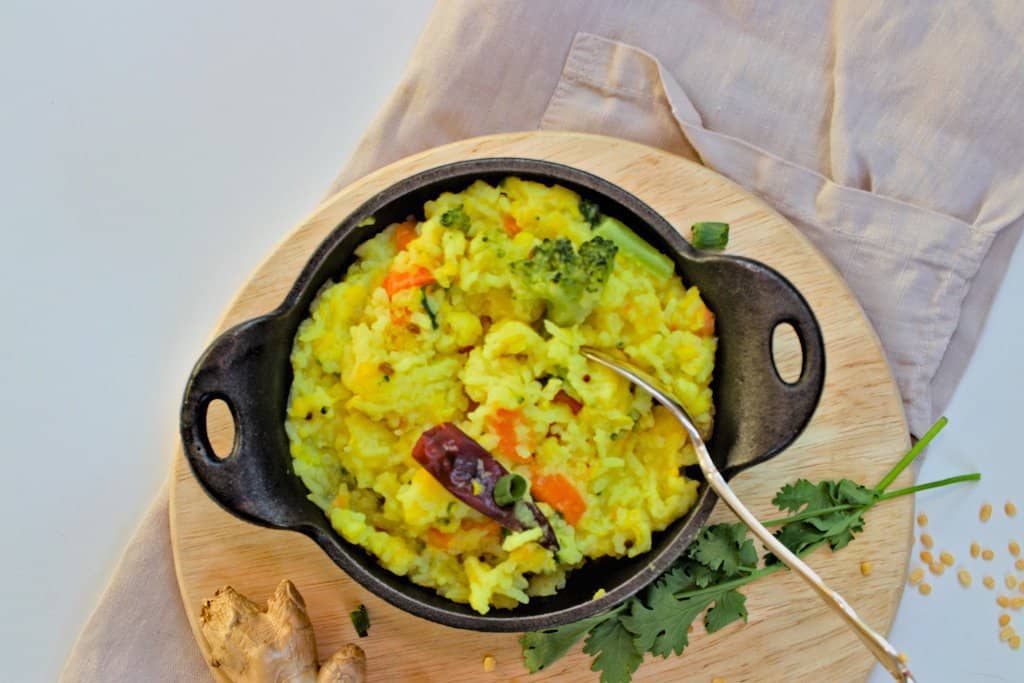
Looking for a quick, wholesome meal? This healthy one pot kitchari — made with Basmati rice and moong dal — ticks that box, and it’s nourishing and easy to digest too.
Looking for a quick and wholesome meal, well Kitchari will tick that box. This healthy one pot kitchari recipe is nourishing and easy to digest. Kitchari has gained popularity in the west with Ayurveda way of life gaining its foothold here. This wholesome dish is made with Basmati rice and moong dal and the skillful use of spices and vegetables can produce balancing effects for the three bodily doshas in addition to the taste.
Table of Contents
What is Kitchari?
Kitchari means a mixture, usually of two grains. This easy one pot kitchari recipe is particularly nourishing and easy to digest. Not only is kitchari very budget friendly, but at the same time it satisfies your hunger without the need for food prepping or planning.
I usually make easy one pot kitchari whenever I haven’t planned ahead and am in need of a quick meal. Because of these reasons and some more, this dish ticks all the boxes for me.
Tools you may need
- Heavy-bottomed pot or saucepan
- Pressure cooker (optional, speeds things up)
- Small saucepan for tempering the spices
How to Make Healthy One Pot Kitchari?
Ingredients List
- White Basmati rice – 1 cup
- Split moong dal – ½ cup
- Salt – 1 tsp
- Ghee – 2 tsp
- Turmeric powder – ½ tsp
- Cumin, mustard, fenugreek & anise seeds
- Water – 3 cups
- Carrots and beans, ginger, coriander leaves
Cooking Instructions
Wash and Soak:
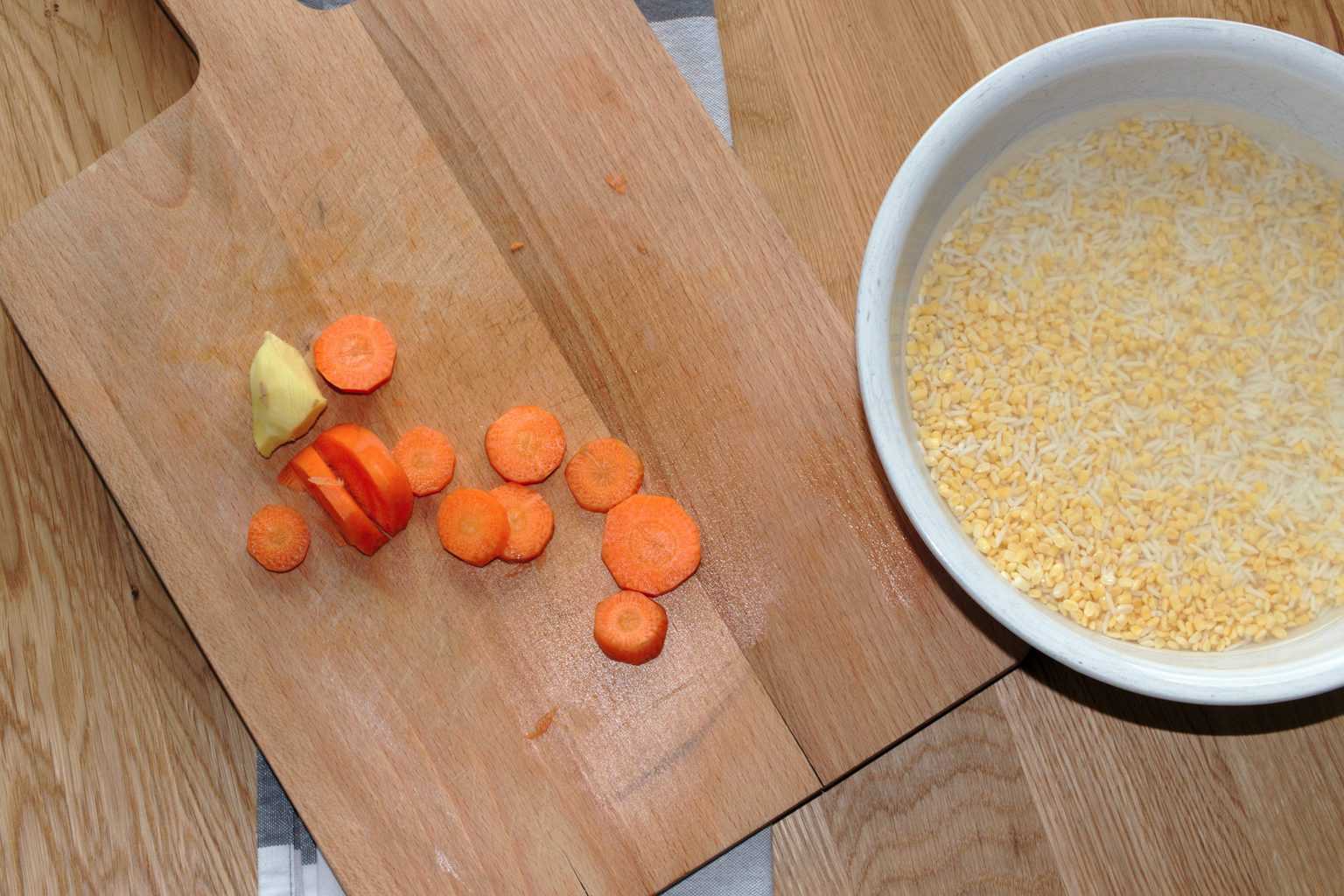
Wash the rice and dal 2 times and drain the water. Soak the rice and dal in water for 15 minutes.
Prep the Vegetables:
Chop the carrots and beans, and grate the ginger. Set aside.
Cook the Rice and Dal:
Cook the rice and dal with the water, turmeric powder, and 1 tsp of ghee.
Pressure Cooker Method:
Add the rice, dal, vegetables, salt and grated ginger together. Once it reaches pressure and the indicator is at level 1, reduce the heat to a minimum and cook for 8 minutes.
Stovetop Method:
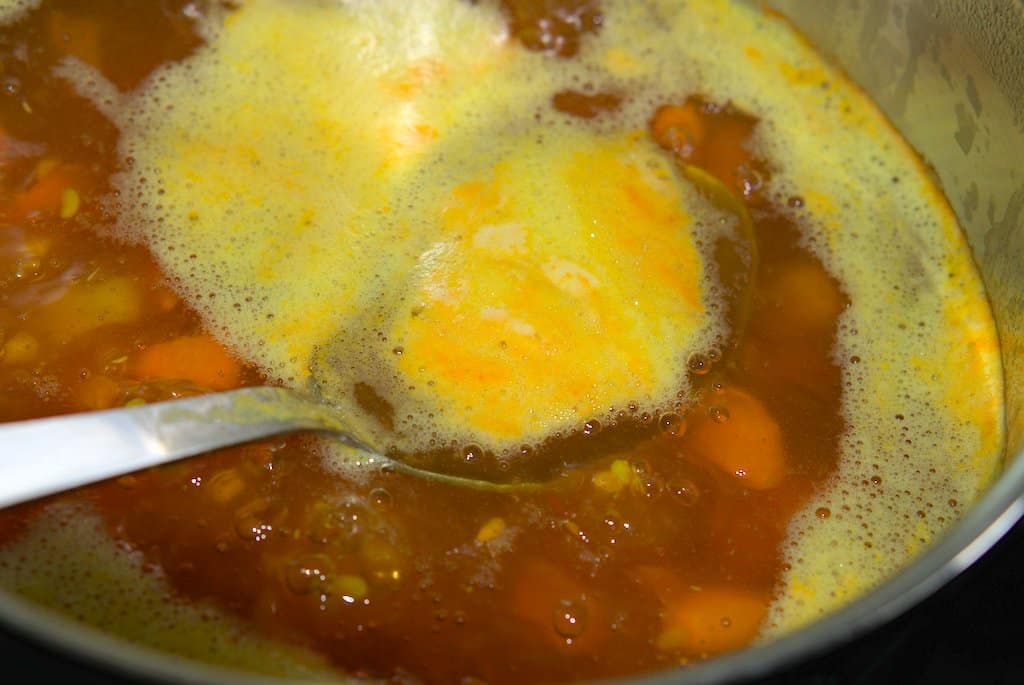
Add 5–6 cups of water to the pan and bring to a boil, skimming off the white froth as it boils. Add the grated ginger, turmeric and salt, then cover and simmer gently until the dal and rice turn soft.
Temper the Spices:
Warm the remaining ghee in a small saucepan. Sauté the asafoetida, cumin seeds, mustard seeds, anise and fenugreek seeds, and a pinch of red chillies until tempered. Stir the tempered spices into the cooked rice and dal.
Serve:
Add fresh coriander leaves before serving. Serve with a cut lemon or yogurt.
Serving Suggestions
Kitchari is traditionally served on its own as a complete meal. Try it with:
A squeeze of lemon: brightens up the dish right before eating.
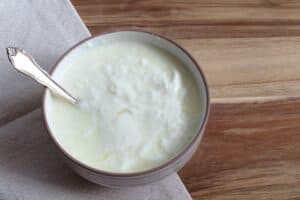
A spoonful of yogurt: cools things down and adds a little tang.
Fresh coriander: stir extra through just before serving for a fresh finish.
Tips for the Perfect Kitchari
Soak the grains: After washing, soak them in water for about 15 minutes — this gives you a softer, fluffier texture.
Choose white rice: White rice is best for kitchari because it’s easy to digest.
Use split moong dal: Split moong beans without the husk (dhal) are easier to digest than whole moong.
Ingredient Notes for Kitchari
Traditional kitchari is built around rice and split moong dal, but there’s some room to adjust:
Rice: white basmati is easiest to digest and cooks quickly; brown rice works too but needs longer cooking.
Vegetables: carrots and beans are used here, but any soft-cooking vegetable you have on hand works well.
Spice level: the dry red chilli is optional — leave it out for a milder dish.
Ways to Vary Kitchari
Once you have the base method down, kitchari is easy to adapt:
Extra vegetables: add whatever soft vegetables you have — spinach, peas, or squash all work well.
Different spices: a pinch of coriander powder or a curry leaf temper can change the flavor profile.
Thicker or thinner: adjust the water for a thick, porridge-like kitchari or a soupier one.
Why Kitchari Is a Balanced Food
During the beginning of spring and early autumn, many people use an Ayurvedic panchakarma detox program built around kitchari for a few weeks at a time. Basmati rice and mung dal together create a balanced, easy-to-digest protein combination that’s considered tridoshic in Ayurveda, meaning it suits all three doshas. It’s a food traditionally used during fasting or cleansing programs, valued for how gentle and nourishing it is on the digestive system.
Watch the Video
Recipe Card
Healthy One Pot Kitchari Recipe
5 Stars 4 Stars 3 Stars 2 Stars 1 Star
No reviews
- Total Time: 15
- Yield: 3 servings
- Diet: Vegetarian
Description
A traditional, wholesome Ayurvedic one-pot kitchari made with basmati rice, moong dal and warming spices — nourishing, easy to digest, and ready in under 20 minutes.
Ingredients
- White Basmati rice – 1 cup
- Split moong dal – ½ cup
- Salt – 1 tsp
- Ghee – 2 tsp
- Turmeric powder – ½ tsp
- Cumin seeds – 1 tsp
- Mustard seeds – 1 tsp
- Fenugreek seeds – ½ tsp
- Anise seeds – ½ tsp
- Asafoetida – 1 pinch
- Salt – 1 to 1½ tsp
- Water – 3 cups
- Carrots and beans – 1 cup (optional)
- Ginger – 1 stick
- Dry red chilli (optional)
- Coriander leaves – 1 tablespoon, chopped
Instructions
-
Wash and Soak:
Wash the rice and dal 2 times and drain the water. Soak the rice and dal in water for 15 minutes.
-
Prep the Vegetables:
Chop the carrots and beans, and grate the ginger. Set aside.
-
Cook the Rice and Dal:
Cook the rice and dal with the water, turmeric powder, and 1 tsp of ghee.
-
Pressure Cooker Method:
Add the rice, dal, vegetables, salt and grated ginger together. Once it reaches pressure and the indicator is at level 1, reduce the heat to a minimum and cook for 8 minutes.
-
Stovetop Method:
Add 5–6 cups of water to the pan and bring to a boil, skimming off the white froth as it boils. Add the grated ginger, turmeric and salt, then cover and simmer gently until the dal and rice turn soft.
-
Temper the Spices:
Warm the remaining ghee in a small saucepan. Sauté the asafoetida, cumin seeds, mustard seeds, anise and fenugreek seeds, and a pinch of red chillies until tempered. Stir the tempered spices into the cooked rice and dal.
-
Serve:
Add fresh coriander leaves before serving. Serve with a cut lemon or yogurt.
Notes
Two cooking methods work here — stovetop takes about 20 minutes, a pressure cooker speeds it up to around 8 minutes once pressure is reached. Serve with a cut lemon or a spoonful of yogurt.
- Prep Time: 5
- Cook Time: 10
- Category: Main Dishes
- Cuisine: Ayurvedic
Nutrition
- Serving Size: 3
- Calories: 250
- Fat: 5
Frequently Asked Questions
Kitchari is a simple mix of rice and split lentils (dal) — this version uses white basmati rice and split moong dal, cooked together with warming spices and vegetables.
Yes. A pressure cooker speeds things up considerably — once it reaches pressure, kitchari only needs about 8 minutes to cook, compared to around 20 minutes on the stovetop.
Yes — it’s a traditional Ayurvedic dish valued for being gentle on digestion, which is why it’s often used during cleansing or fasting periods.
Your feedback is valuable
If you try this recipe and love it, I would love if you come back and gave it 5 stars! Thank you so much for visiting Vital Fair Living – we’re so happy you’re here! I would love it if you can share this recipe using the social media buttons you see next to the post.