Disclosure: This post contains affiliate links, meaning, at no additional cost to you, we will earn a small commission if you click through and make a purchase. Learn more
A season of planning paid off with a bountiful June and July harvest — a real step up from the first year’s beginner overflow, with tomatoes stealing the show and potatoes proving genuinely foolproof.
A lot of planning and effort went into this bountiful organic vegetable harvest through June and July. The groundwork actually started the previous autumn, planting vegetables that would be ready for this summer’s harvest. There’s still plenty to learn to get more productive in the years ahead, but here’s a summary of how things went.
Having a home with a big garden, and enjoying an organic harvest from the labor that goes into it, has been a goal since getting married. The first year of gardening, started only the previous spring, was productive too — productive enough that some of the surplus ended up being given away. This year called for more thoughtful planning, aiming not just for a good summer harvest, but one that could keep producing well into winter.
Table of Contents
A Very Dry Summer Overall
The past few weeks brought a heat wave across most of Europe, with near-constant temperatures between 34 and 36°C. Most lawns turned brown from the extreme heat and lack of rain, and the garden suffered along with them. Fireworks were even banned for Swiss National Day on August 1st, over fears of forest fires.
Onions and garlic did particularly badly this year — the garlic bulbs came in smaller than hoped, and there was practically nothing to harvest in onions, so those will be saved and replanted come autumn. A neighbor mentioned that these bulbs need more water for optimal growth; watering had been happening regularly, but evidently not enough.
Potato Harvest
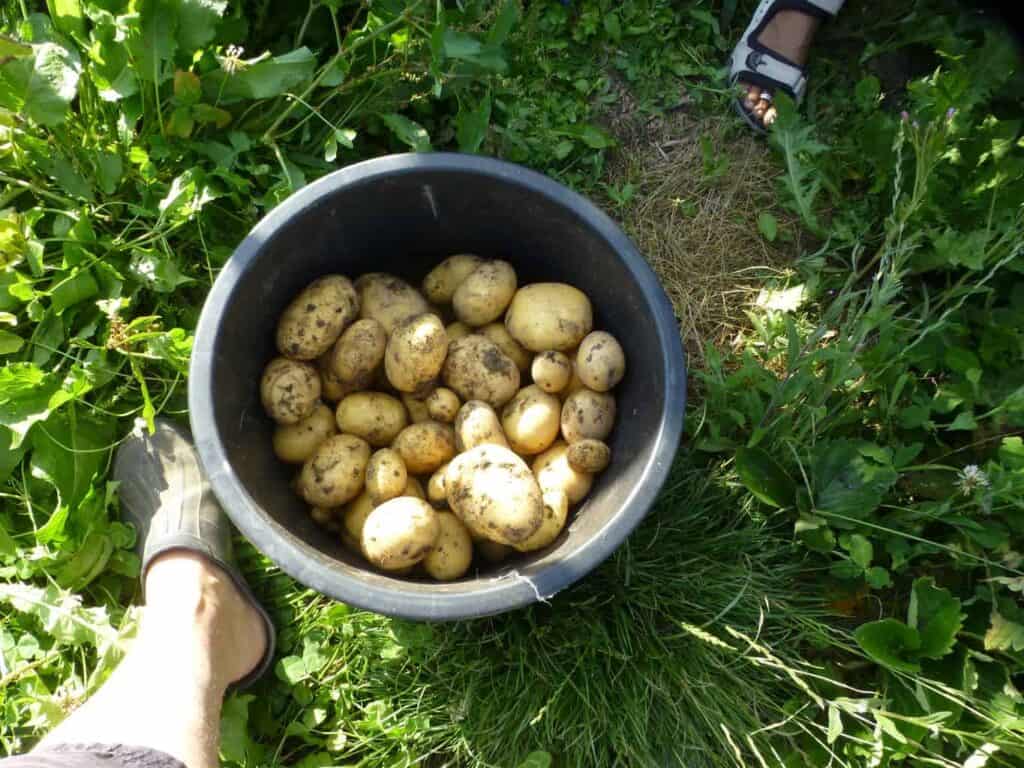
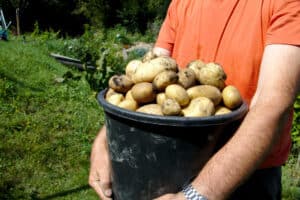
Charlotte potatoes went in the previous autumn, and there’s enough now to last a few months — helped along by a few forgotten potatoes from the cellar that got planted rather than thrown out with their roots still on.
The method is simple: grow them until the foliage turns yellow, then loosen the soil before uprooting. It’s genuinely striking how many potatoes come from just one planted root.
Charlotte potatoes are a great multi-purpose variety — sturdy, and they don’t turn mushy easily when cooked. They work well in salads, baked, or as fries. Stored unwashed in the cellar, they last longer that way — potatoes generally keep best unwashed, with the soil still on, somewhere dark and cool. A firm family favorite here.
What Came In This Season
Supplies List
Charlotte potatoes
White & Savoy cabbages
Tomatoes (abundant)
Zucchini, Swiss chard, okra, beans
Eggplants, bell peppers
Bitter melon, snake gourd
Instructions
Cabbages:
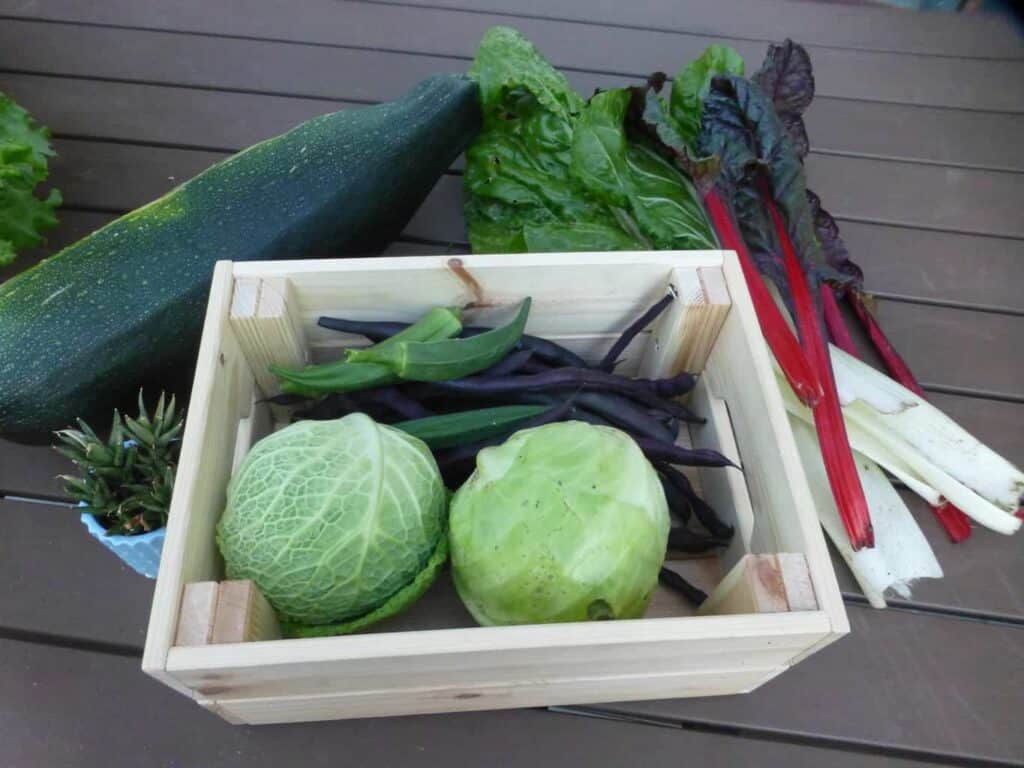
Most of the white cabbages were harvested around the start of July, with the Savoy cabbages left in the bed a while longer. The white cabbages went into sauerkraut, with a couple set aside in the fridge instead — cabbages generally keep well there if stored properly. The sauerkraut process was filmed in full and shared in an earlier post. Savoy cabbages usually just get cooked.
Abundant Tomato Harvest:
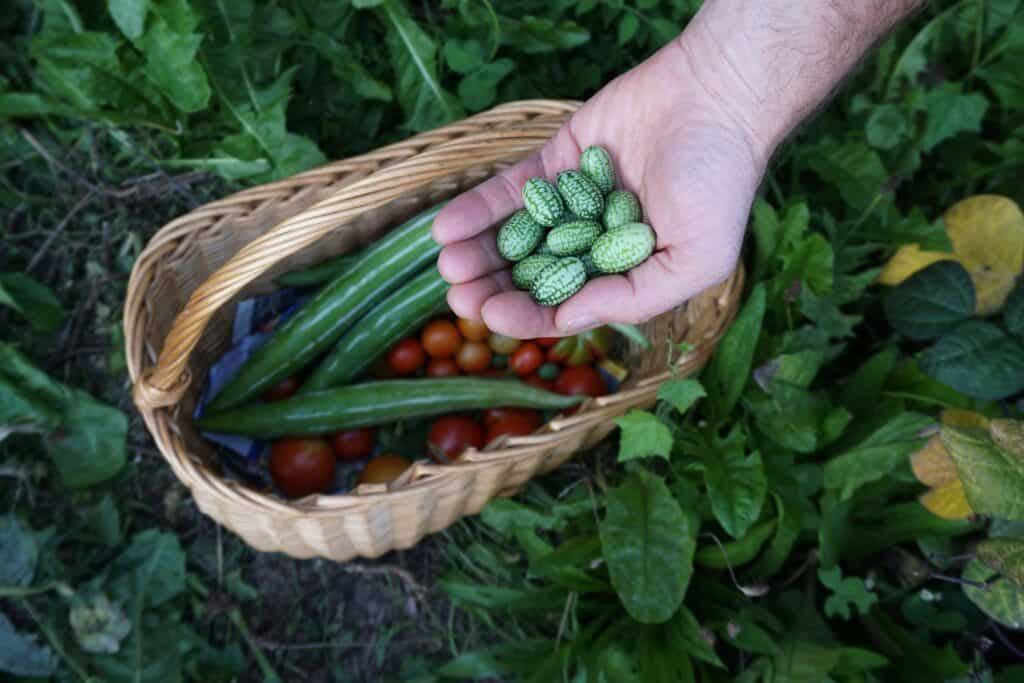
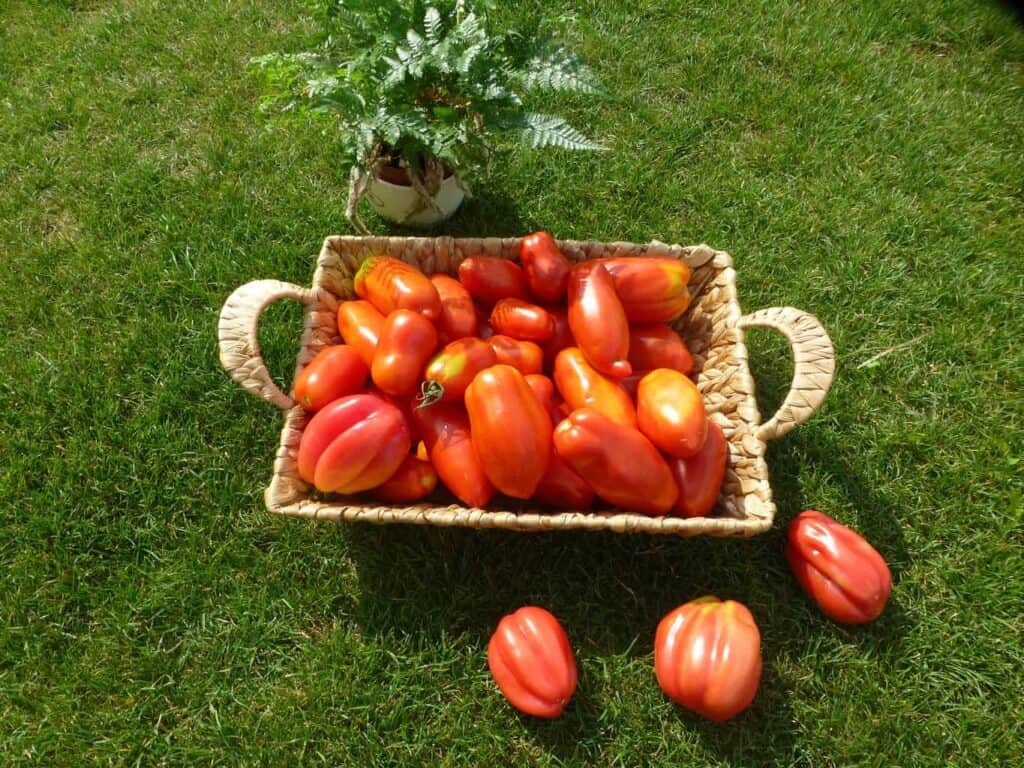
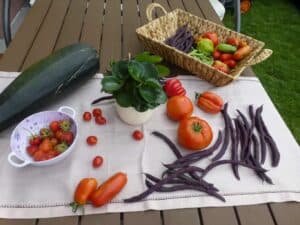
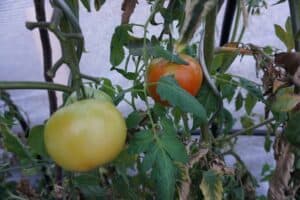
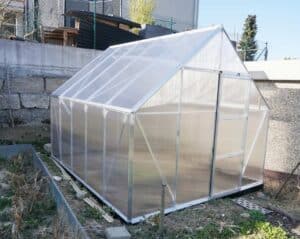
Tomatoes have genuinely stolen the show this year — there’s been so many that salads have been the go-to way to use them up. The abundance mostly comes down to the newly installed greenhouse and a run of warm weather, so there’s not much to complain about, especially now that things have finally cooled off. A few kilos got canned, with a video of the process filmed for a future post.
More Regular Harvests:
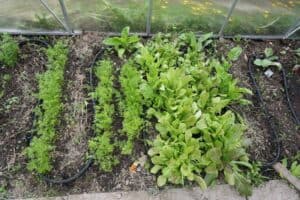
Zucchini, Swiss chard, okra, and a good number of beans have all been coming in regularly too. Eggplants and bell peppers are starting to show signs of a good yield as well. Bitter melon turned out to be the most novel harvest this year, not yet cooked at the time of writing, with snake gourd also starting to appear.
Water onions and garlic generously: these bulbs need more water than expected for optimal growth — a lesson learned after a poor onion and garlic harvest this year. Replant forgotten potatoes rather than toss them: potatoes that started sprouting in the cellar can go straight back into the ground instead of being thrown away. Store potatoes unwashed: keeping the soil on and storing them somewhere dark and cool helps them last for months.
Watch the Video
Frequently Asked Questions
Why Store Potatoes Unwashed?
Potatoes stored unwashed, with the soil still on, tend to last longer — best kept somewhere dark and cool, like a cellar.
Why Did the Onion and Garlic Harvest Do Poorly?
These bulbs need more water than expected for optimal growth — regular watering wasn’t quite enough this particular season.
Can You Replant Sprouting Potatoes from Storage?
Yes — potatoes that have started sprouting in storage can be planted directly rather than thrown away, and often produce a good yield.